


Global Food Security at Risk in 2026: How Middle East Tensions Could Affect Fertilizer, Energy and Nutrition Prices
Growing geopolitical tensions in the Middle East are raising concerns about the stability of global food supply chains. Experts warn that disruptions in energy markets, fertilizer production and maritime transport could increase nutrition prices worldwide in the coming months.
This analysis is based on reports and data published by reputable international sources such as Deutsche Welle, Euronews, the International Food Policy Research Institute (IFPRI), and the UN World Food Programme.
A Critical Global Trade Route
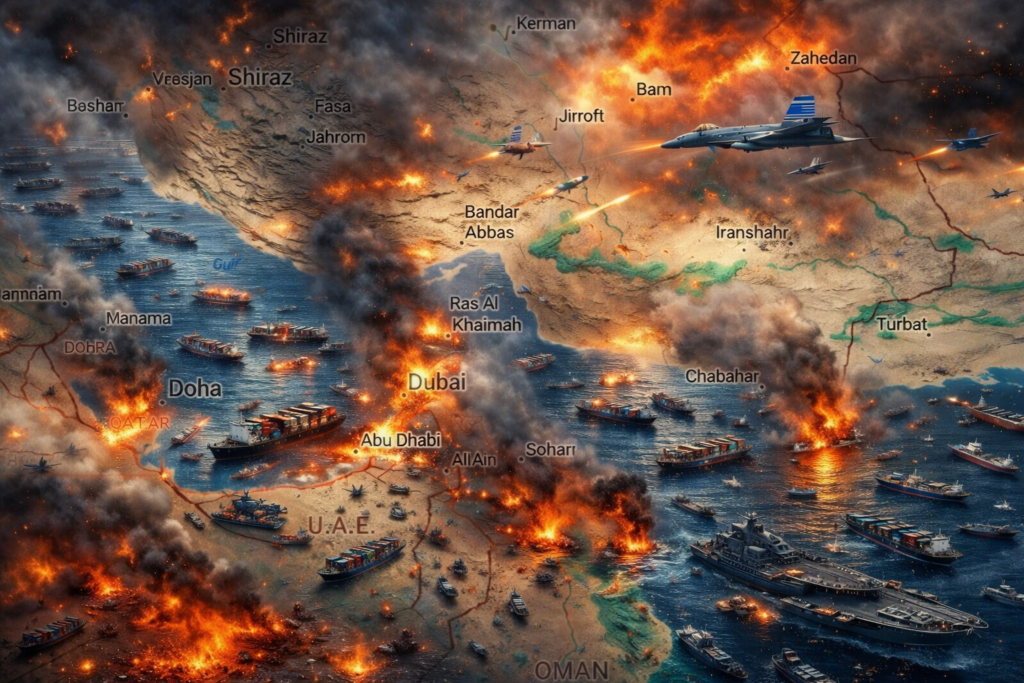
At the center of these concerns is the Strait of Hormuz, one of the world’s most important maritime trade routes. The strait connects the Persian Gulf to global markets and carries:
- About 27% of global oil exports
- Around 20% of LNG trade
- Nearly 30% of globally traded fertilizers
Any disruption in shipping through this narrow waterway could significantly affect global energy prices, fertilizer supply and transportation costs.
Fertilizer Markets Under Pressure
The Persian Gulf region plays a major role in global fertilizer production. Key exporters such as Qatar, Saudi Arabia and Oman supply large quantities of fertilizers including urea, ammonia and diammonium phosphate (DAP).
Recent market data shows that fertilizer prices have already started to rise. Urea prices in the Middle East have exceeded $590 per metric ton, while production costs for ammonia in Europe have increased sharply due to rising natural gas prices.
Experts warn that prolonged disruptions could affect up to one-third of global fertilizer trade, potentially reducing crop yields in several regions.
Energy Prices and Food Inflation
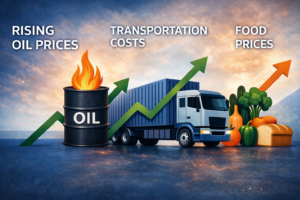
Energy is a major component of food production. Rising oil and gas prices increase the cost of:
- Farm operations and machinery
- Fertilizer production
- Transportation and logistics
- Food processing and storage
Oil prices have recently climbed above $100 per barrel, which could eventually translate into higher nutrition prices globally.
Shipping Disruptions and Higher Freight Costs
Shipping routes in the Persian Gulf have also been affected by security risks. War-risk insurance premiums for vessels have risen significantly, while shipping traffic through the Strait of Hormuz has declined.
As a result, freight costs for some shipping routes have increased dramatically, adding further pressure to global supply chains.
Impact on Global Food Security
International organizations warn that higher energy, fertilizer and transport costs could increase food insecurity in vulnerable regions.
Countries that rely heavily on imported fertilizers and food supplies, particularly in Asia, Africa and parts of the Middle East, may face the greatest risks.
For example, India and Brazil depend heavily on imported fertilizers to support their agricultural production.
Food Situation in Portugal
Despite these global concerns, experts say that recent increases in food prices in Portugal cannot yet be directly linked to the Middle East conflict.
According to DECO – Portuguese Association for Consumer Protection, the average cost of a basic nourishment basket recently reached €254, the highest level since monitoring began in 2022.
However, economists suggest that weather conditions, market adjustments and temporary speculation may also be contributing to price changes.
A Situation That Requires Close Monitoring
The global economy has already experienced similar shocks following the Russian invasion of Ukraine, which disrupted energy and food markets worldwide.
While the long-term impact of current tensions remains uncertain, analysts agree that prolonged disruptions in energy, fertilizer and shipping markets could eventually affect food prices and agricultural production globally.
Sources:
This article is based on publicly available reports and analyses published by leading international organizations and media outlets including Deutsche Welle, Euronews, IFPRI, the UN World Food Programme and market data providers.
