

The Future of the Food Industry 2026
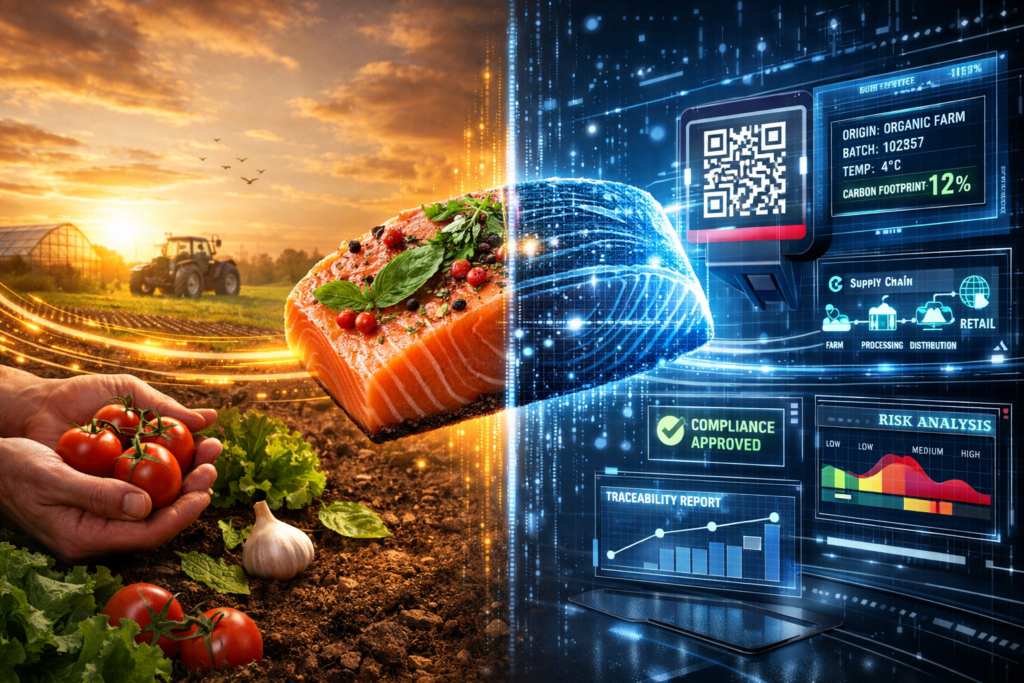
In recent years, the global food industry has entered a phase of profound transformation. This shift is no longer limited to product innovation; it now impacts the entire value chain, from raw material sourcing to consumer engagement. Emerging trends across Europe and the UK clearly indicate that the future of the industry will be shaped by three key pillars: smart regulation, digital transparency, and a return to real quality.
These changes are redefining consumer expectations, reshaping business models, and introducing new regulatory and operational standards for food companies worldwide.
-
The Shift Toward Smart Food Regulation
Regulatory bodies, particularly in the UK, are moving toward more advanced, data-driven systems to oversee food safety and quality. Traditional inspection-heavy approaches are being replaced by risk-based and technology-enabled frameworks.
According to New Food Magazine, organizations such as the Food Standards Agency (FSA) are working on systems that:
- Use real-time data to identify and monitor risks
- Focus inspections on high-risk businesses
- Enhance transparency and consumer access to information
Source: New Food Magazine
This evolution means that companies must:
- Implement strong traceability systems
- Maintain accurate and accessible documentation
- Continuously align with evolving regulatory requirements
-
The Rise of Smart Labels and QR Codes
One of the most significant innovations in the food sector is the transition from traditional barcodes to Smart Labels powered by QR codes.
As highlighted by FoodDive, the industry is moving toward the “Sunrise 2027” initiative, which aims to replace conventional barcodes with 2D codes that can be scanned at checkout and by consumers.
These smart labels provide access to extensive product information, including:
- Full ingredient lists
- Nutritional data
- Allergen details
- Ingredient sourcing and origin
- Sustainability and environmental impact
Source: FoodDive
Key insights from this trend:
- Over 100,000 products already use SmartLabel technology
- Millions of scans occur annually
- Consumers spend significantly more time engaging with digital product information
Transparency is no longer a competitive advantage—it is becoming a market requirement.
-
The Return to Authentic Ingredients and Quality
Alongside digital transformation, another powerful trend is emerging: a return to real, high-quality ingredients.
Rising costs of raw materials “particularly cocoa” pushed many manufacturers to adopt cheaper substitutes. However, consumer backlash has demonstrated that such strategies are not sustainable.
A report by FoodDive highlights how The Hershey Company responded to criticism by:
- Addressing concerns over ingredient substitutions
- Committing to restoring classic formulations
- Reinforcing product quality and authenticity
Source: FoodDive
Today’s consumers:
- Prefer clean-label products
- Demand natural and recognizable ingredients
- Care deeply about product authenticity and transparency
This signals a clear market shift toward quality over cost-cutting.
-
Key Industry Trends at a Glance
| Key Trend | Characteristics | Business Impact | Opportunities |
| Smart Regulation | Data-driven, risk-based oversight | Higher compliance requirements | Regulatory consulting & compliance services |
| Digital Labeling | QR codes, SmartLabel systems | Increased transparency expectations | Consumer engagement & digital integration |
| Return to Quality | Real ingredients, clean label | Higher production costs | Brand differentiation & trust building |
| Supply Chain Transparency | Full traceability | Need for detailed documentation | Competitive advantage in export markets |
-
Convergence of Trends: The New Industry Standard
What makes these developments particularly important is their convergence. These trends are not isolated, they are reinforcing one another.
In the near future, successful food products will need to:
- Fully comply with evolving regulations
- Offer accessible and transparent digital information
- Use high-quality, authentic ingredients
This means competition is no longer driven solely by price, but by:
Trust, transparency, and real quality
-
Strategic Opportunities for International Trade Businesses
For companies involved in import, export, and sourcing of food products and raw materials, these trends create significant opportunities:
- Supplying High-Quality Raw Materials
Growing demand for natural and authentic ingredients opens new doors for reliable suppliers.
- Value-Added Services
Providing services such as:
- Product documentation
- Technical data support
- Assistance with QR labeling implementation
can create a strong competitive edge.
- Expanding into Regulated Markets
Businesses that align with new standards will find it easier to enter and grow in European and UK markets.
Conclusion
The food industry is entering a new era—one defined by:
- Transparency as a requirement, not an option
- Technology as a core communication tool
- Quality and authenticity as key purchasing drivers
For businesses that adapt to these changes, this transformation represents not a threat, but a powerful opportunity for growth and expansion in global markets.
If you are active in food sourcing, import/export, or supply chain management, now is the time to realign your strategy around three critical pillars:
Transparency, Quality, and Digitalization.
