


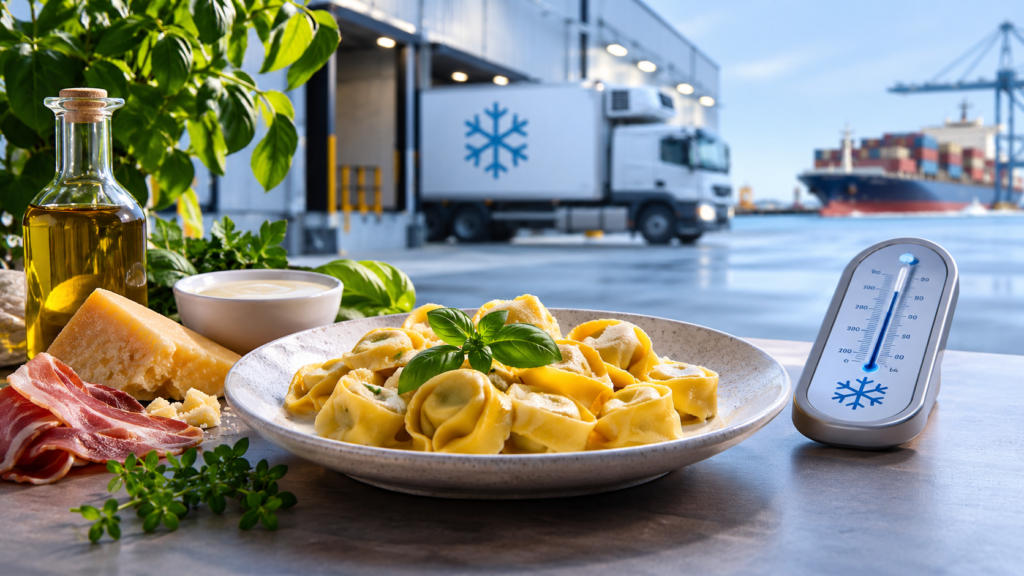
ALDI Pasta Recall Highlights the Importance of Food Safety and Supply Chain Management
A recent precautionary product recall in the United States has brought renewed attention to one of the most important challenges in the global food industry: maintaining product safety throughout storage, transportation and distribution.
On 16 November 2026, ALDI announced the voluntary recall of two refrigerated pasta products sold under its Priano brand in selected U.S. stores. The decision followed concerns that the products may not have been maintained at appropriate temperatures, potentially creating conditions for the growth of harmful microorganisms, including Clostridium botulinum.
The announcement was published by the U.S. Food and Drug Administration (FDA) on 17 November 2026.
Importantly, no illnesses associated with the affected products had been reported at the time of the official announcement.
What Happened? Understanding the ALDI Pasta Recall
The recall involved two refrigerated pasta products:
- Priano Protein Carbonara Tortelloni
- Priano Protein Herb & Cheese Tortelloni
The affected products carried lot number T9101926 and a best-before date of 18 December 2026. They were distributed through selected ALDI stores in Alabama, Georgia, North Carolina and South Carolina.
According to the FDA-published company announcement, concerns related to possible temperature-control issues during storage, distribution or sale.
ALDI responded by removing the affected products from store shelves and advising customers to discard them or return them for a full refund.
The recall was a precautionary food safety measure. The announcement did not establish that the products were contaminated or that consumers had become ill.
Why Temperature Control Matters in the Food Supply Chain

Temperature management is a fundamental component of food safety, particularly for refrigerated and temperature-sensitive products.
When products are exposed to unsuitable temperatures, the conditions may allow certain microorganisms to multiply, potentially compromising product safety.
In the ALDI case, the concern included the possible growth of Clostridium botulinum, a bacterium capable of producing botulinum toxin, which causes botulism.
This situation demonstrates why food safety cannot be limited to manufacturing facilities alone.
Effective controls must continue throughout the supply chain, including:
- Storage and warehouse management
- Temperature-controlled transportation
- Distribution and retail handling
- Product traceability and documentation
- Supplier and logistics partner coordination
For businesses operating in international food trade, these controls are particularly relevant because products may pass through multiple logistics providers, warehouses and distribution networks before reaching their final destination.
Beyond Botulism: Listeria Concerns in the European Food Industry
The importance of microbiological monitoring is also reflected in recent developments in Europe.
On 17 November 2026, Food Safety News reported that Swiss authorities were investigating whether Listeria detected at a cheese producer could be connected to recent human infections.
The investigation represents a separate food safety issue, unrelated to the ALDI recall.
Listeria monocytogenes is a significant concern in the food industry because it can survive and grow at refrigeration temperatures, making effective hygiene, environmental monitoring and preventive controls especially important.
Although Clostridium botulinum and Listeria monocytogenes present different microbiological risks, both cases highlight the need for continuous vigilance throughout food production and distribution.
What These Developments Mean for International Food Importers and Exporters

For companies engaged in international food trading, food safety incidents offer important lessons beyond the immediate products or markets involved.
The reliability of global food supply chains depends on more than product availability and competitive pricing. It also requires effective communication, transparent documentation, traceability and compliance with applicable food safety requirements.
Three areas deserve particular attention.
1. Cold Chain Integrity
Temperature-sensitive products require appropriate handling conditions throughout transport and storage. Monitoring and documenting these conditions can help identify deviations before they affect product safety.
2. Traceability and Supplier Reliability
Reliable traceability systems allow businesses to identify affected batches, communicate with partners and respond efficiently when product safety concerns arise.
3. Regulatory Compliance Across Markets
Importers and exporters must understand the regulatory requirements of their destination markets. For companies operating in Portugal and the wider European Union, compliance with applicable EU food safety, hygiene and traceability requirements is essential.
Food Safety as a Foundation of International Trade
Product recalls are an established part of modern food safety systems. When potential risks are identified, timely preventive action can help protect consumers and reinforce the importance of effective monitoring procedures.
The ALDI recall and the separate Swiss Listeria investigation illustrate a broader industry reality: food safety is a shared responsibility involving producers, logistics providers, importers, exporters, distributors and retailers.
As international food supply chains become increasingly interconnected, the ability to manage risks, maintain transparency and respond quickly to emerging concerns remains essential.
For the international food trade sector, strong food safety practices are not only a regulatory requirement, they are a foundation for long-term business relationships, market confidence and sustainable growth.
Sources and References
- U.S. Food and Drug Administration (FDA) — ALDI Recalls Priano Protein Carbonara Tortelloni and Priano Protein Herb & Cheese Tortelloni Because of Possible Health Risk. Published 17 November 2026.
- Food Safety News — Cheese Linked to Swiss Listeria Infections. Joe Whitworth, 17 November 2026.
